Basement Window Installation Services in Concord, NH
Basement Window Installation Kings provides basement window installation, basement window replacement, and egress window installation services in the Concord, NH area for both residential and commercial properties, from swapping old steel hopper windows to cutting new openings with window wells. Contact us now for a free estimate.
How Much Does Basement Window Installation Cost in Concord, NH?
Basement window installation in Concord, NH costs anywhere from $320 to $1,060 on average for replacing one standard hopper or sliding window in an existing opening. The price depends on the window size and type, the frame material, whether the old frame is cast into the concrete, custom sizing, interior trim, and whether the opening must be cut or enlarged for egress.
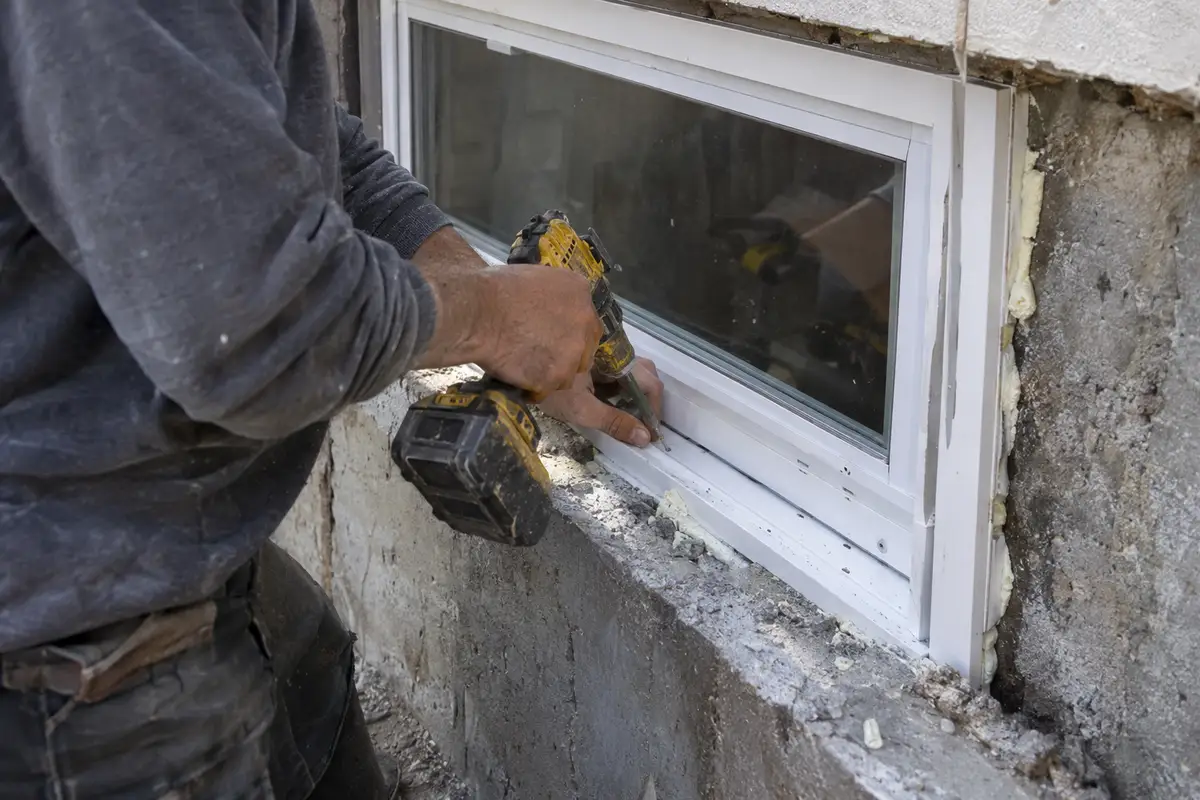
Do You Install Basement Windows in Homes and Commercial Buildings?
Yes, we install basement windows in houses, duplexes, rental units, and small commercial buildings with below-grade space. Let us know the property type and how the basement is used.
Do You Service My Area?
Yes, we cover the Concord, NH area. Send us the property address and we'll confirm.
Do You Install Egress Windows in Basements?
Yes, we install basement egress windows, including cutting or enlarging the opening in the foundation, digging out and setting the window well, and adding a ladder or steps when the well is deep.
Does an Egress Window Cost More Than a Standard Basement Window?
Yes, a lot more. A below-grade egress window typically runs $2,500 to $6,000 or more, because it usually means cutting concrete, excavating, a new well, drainage, and a permit.
How Soon Can You Install My Basement Windows?
Same-size replacements can usually be scheduled as soon as the windows arrive, and custom sizes take longer to order. Egress jobs also wait on the permit and the 811 utility locate before we dig.
What Information Do You Need for a Basement Window Quote?
We need the address, the number of windows, rough sizes, photos from inside and outside, and whether the frames are steel, wood, or vinyl. Tell us if any window needs to become an egress window.
Do I Need to Measure My Basement Windows Before Calling?
No, rough sizes help, but we take final measurements ourselves. Older foundations are often out of square, so we measure each opening at the top, middle, and bottom before ordering.
Will I Need to Be Home During the Installation?
Yes, at least to let us in, since most basement windows are removed and set from inside. Once we have access to the basement, you don't need to stay for the whole job.
Can I Get Basement Windows Installed if I'm Renting?
Yes, but the owner has to approve the work, since it changes part of the building. Have your landlord or property manager contact us, or send us their written OK.
Do I Need a Permit to Install a Basement Window?
No, not usually for a same-size replacement. Cutting a new opening or enlarging one for egress almost always needs a building permit, and some departments ask for plans showing the header. Your local building department decides, and we handle the application.
Can I Get a Price Before the Work Begins?
Yes, we confirm the price before starting. If we find rot, cracked concrete, or a frame buried deeper than expected once the old window is out, we talk to you before doing extra work.
How Long Does Basement Window Installation Take?
We replace most basement windows in one to three hours each, depending on how stubborn the old frame is. A new egress window with excavation and a well usually takes us one to three days.
Can You Replace Old Steel Basement Windows?
Yes, it's one of the most common basement window jobs. Old steel frames are often cast into the concrete, so we grind and pry them out, clean up the opening, and set the new window.
Can You Install the New Window Inside the Old Steel Frame?
Yes, in some cases, but we usually remove the steel frame. Taking it out gives a bigger glass area and gets rid of the rusting metal that let water in.
Can You Replace a Rotted Wood Basement Window Frame?
Yes, we cut out the rotted frame and rebuild the opening with pressure-treated lumber or set the new window straight to the concrete. Tell us if the wood above the window is soft too.
Can You Install a Hopper Window in My Basement?
Yes, hoppers are the most common basement window. They hinge at the bottom and tilt in from the top, which lets air in while shedding rain.
Can You Install a Sliding Basement Window?
Yes, sliders suit wide, short basement openings. Send us the width and height.
Can You Install a Casement Window in a Basement?
Yes, we use casements for most egress openings because the whole sash swings open, giving the most clear space for the size.
Can You Replace Glass Block With a Window That Opens?
Yes, we remove the glass block and set an operable window in the opening. Tell us the size of the block panel and whether it has a vent or dryer outlet in it.
Will New Basement Windows Stop Water Coming In?
Yes, if the water is leaking through a rusted frame or failed seal. If the well itself fills up, it needs a drain or gravel base, so tell us whether water comes in during heavy rain.
Can You Make My Basement Window Bigger?
Yes, we can cut the opening wider or lower in the foundation wall. Enlarging an opening typically runs $500 to $1,000, or $1,500 to $3,000 to reach egress size, before any new window well.
Can You Cut a New Window Into a Basement Wall?
Yes, we cut new openings in poured concrete foundations, usually with a diamond saw. Adding a window where there was none typically costs $1,500 to $3,500, or more with a new well. Tell us what's outside that wall, such as a deck, driveway, or gas meter.
Can You Cut a Window Into a Concrete Block Foundation?
Yes, we cut block walls, fill the open cores around the opening with concrete, and add a header when the opening calls for one. Bowed or cracked walls may need an engineer to look first.
How Big Does a Basement Egress Window Have to Be?
Code commonly calls for an opening at least 20 inches wide and 24 inches high, with 5 to 5.7 square feet clear and a sill no higher than 44 inches. We size it to your local code.
Does Every Basement Bedroom Need an Egress Window?
Yes, in most places every basement sleeping room needs its own emergency escape opening. We can check what your building department requires before you finish the space.
Can You Install a Window Well?
Yes, we dig out and install steel or plastic window wells. An egress well needs at least 3 feet by 3 feet of clear space in front of the open window.
Do I Need a Ladder in My Window Well?
Yes, if the well is deeper than 44 inches. We install a fixed ladder or built-in steps so someone can climb out in an emergency.
Can You Install a Window Well Cover?
Yes, we fit covers to keep out leaves, snow, kids, and animals. On an egress well, code generally requires a cover that opens from below without tools or keys, so we use one made for egress.
Can You Install Basement Windows in Winter?
Yes, we replace windows in existing openings year round and only have each one open for a short time. Egress jobs that need digging can be slowed or delayed when the ground is frozen.
Should I Clear Things Away From the Basement Windows Before You Come?
Yes, clear a path to each window and give us working room in front of it. Outside, move anything sitting in the window wells.
Will Cutting an Egress Opening Make a Mess Inside My Basement?
Yes, cutting concrete makes dust or slurry, so we seal off the work area and cover the floor. Tell us if the basement is finished so we can plan the protection.
How Do You Seal a New Basement Window Into the Concrete?
We shim the window level and plumb, fasten it with masonry screws, fill the gap with low-expansion window foam, and seal the outside with a sealant that bonds to concrete. Flashing tape goes on where wood bucks are used.
What Is the Best Material for Basement Windows?
Vinyl, in most cases. It won't rust or rot in a damp foundation opening, and it's usually the most affordable. We use steel or custom frames mainly to match existing windows.
Should My Basement Windows Be Double Pane?
Yes, double-pane glass cuts drafts and condensation compared with old single-pane steel windows. Low-E glass is worth adding if the basement is finished and heated.
Is It Worth Replacing Old Basement Windows?
Yes, if they are single-pane, rusted, rotted, or leaking. We'd replace them before finishing the basement, since sealed windows cut drafts and water entry.
Is an Egress Window Worth the Cost?
Yes, if you plan to use the basement as a bedroom or living space. A legal basement bedroom needs one, and it brings in daylight and fresh air.
Can I Replace Basement Windows Myself?
Yes, a vinyl window in a clean wood opening is a fair DIY job. We'd leave steel frames cast in concrete and any foundation cutting to a pro, since a bad cut can cause leaks or cracks.
How Long Do New Basement Windows Last?
Good basement windows typically last 20 years or more. Keep the well clear of leaves and standing water.
Do You Finish the Trim Around New Basement Windows?
Yes, we can finish the inside with trim, a sill, and drywall returns, and patch the concrete outside. Interior finishing is priced separately, so tell us if the basement is finished or bare.
Do You Haul Away the Old Windows and Dirt?
Yes, we take the old windows, frames, and leftover soil with us.
